
Your Worldschooling Journey: Transportation Options
Oh, the places you’ll go! Sure, but how will you get there? There are a number of considerations for deciding between the many modes of transportation you’ll take as you worldschool, including time, cost, and environmental impact. Often, time and cost are a trade-off, but as we’ve already mentioned, when traveling long term, you may find you have more flexibility when considering how to make the most of your days and dollars.
The environmental impact of car, train, boat, and air travel is an important consideration for many traveling families. Air travel produces greenhouse gases from burning fuel, which contributes to climate change. Shorter hops contribute more per mile than long-haul flights, as taking off uses more fuel than cruising. There is a wide variation among per-passenger emissions for many airlines, so if you plan to travel by air, do some homework about the greening of transportation. Train, car, bus, and small-boat travel may have a considerably smaller carbon footprint, while cruise ships often fall into a similar category as flying.
A Note on Tours
One of the questions you may wrestle with is whether to take any organized tours. Packaged tours can be great for destination selection, logistics planning, educational value, and local sensitivity. They can also be a good way to meet and bond with other travelers. However, many company-guided, multiday tours are designed for people on shorter trips, and Wonder Year families may feel that paying extra money for a guide or escort is an unnecessary expense. Some worldschoolers prefer not to be locked into a group itinerary, especially when traveling with younger kids, and instead find that they get comfortable quickly with managing these aspects of travel on their own.
That said, there are some places where you can travel respectfully, safely, and feasibly only by using organized tour companies and guides. Guides hold the keys to some of the richest experiences in the world, whether they are single-day excursions or multiday journeys. A few examples include the following:
- Extreme adventures: rafting the Grand Canyon, hiking Amantaní Island on Lake Titicaca, glacier trekking in Patagonia
- Wildlife viewing in places like the Galápagos, Brazilian Pantanal, and African savanna
- Countries** like Bhutan, Cuba, and China, where guides are legally required or practically necessary for getting off the beaten path
- Some cultural tours to sacred, religious, or ancestral locations
- “Behind the scenes” visits to sites and cities, such as the Vatican and other holy places
- Specialized knowledge: art, history, or culinary tours, such as the history of enslaved people in Savannah, food in New Orleans, or politics in Budapest
When we needed guides, we found that local independent operators—hired on the ground at quite reasonable prices—offered some of the most insightful and educational experiences of our respective Wonder Years. They can often be sourced online or at your accommodations, and even many taxi drivers can double as guides.
Modes of Transportation
Air Travel
If traveling internationally, you might need to determine which direction you plan to fly around the globe—east or west—and then start figuring out your specific route. But not everyone sees the world by going “around” it. You might decide to use a location as a home base for your travels. Some families might build worldschooling around a foreign work assignment or sabbatical base location.
“Round the world” (RTW) tickets have gotten a lot of media attention over the last decade and can be a good option for some families. They are most useful to those who want to establish their key destinations early and who don’t plan to make many adjustments along the way. These tickets resolve your airline bookings up front, relieving you from this duty while traveling. They also eliminate uncertainty around your air travel expenses, locking in this cost so you can focus on other budget line items. If you have airline miles to use, booking RTW tickets can save you a lot of dough, and on the flip side, if you are purchasing your flights, they can help you accrue a lot of miles.
However, RTW tickets do have some downsides. They’re not always the least expensive or the easiest to plan around. RTW tickets often have rules to which you must adhere, including a set number of stops per continent, time constraints, or one-directional travel only. Probably the biggest limitation is their lack of flexibility. Having all tickets locked in ahead of time removes the opportunity for spontaneity as you travel. Part of the wonder in a Wonder Year can be not knowing exactly where you’ll end up or for how long you’ll stay. You might fall unexpectedly in love with a destination or dislike one so much that you’re ready to move on sooner than planned. RTW tickets often restrict or charge hefty fees for changes in destinations or dates, putting a dent in going with the flow.
General Guidance for Airline Tickets:
- Conduct online searches in incognito or private mode! Your computer logs your other searches in its cookies, and airline algorithms can and will use this info to tweak the prices you are seeing.
- Use search engines to shop across many airlines at once. Since these sites change over time, find out what the smartest travelers are currently using.
- Get savvy with your flight segments.*One-way flights can be less expensive than multistop tickets, so it may be advantageous to string together multiple single-leg journeys. If you are flying to an expensive destination, it might be cheaper to book that as a connection and just get off early. Just make sure your luggage doesn’t go on to the final destination without you.
- When allowed by the airline, consider booking your ticket using another currency in which the rates may be cheaper.
- Unlike many other bulk purchases, airlines often charge more for group tickets than for individual ones. That’s because they have tiered pricing (a set number of seats available at each price), and their booking algorithms aren’t set up to split up group pricing as tiers sell out. In other words, if you are booking for your family of five in a single reservation, they may not price three tickets at the US\$250 tier and two tickets at US\$325 tier; all five could be charged at \$325 each. It’s often best to purchase a ticket for each person in your family separately, or at least play around with the quantities to ensure you are all paying the same amount in a group booking.
Train Travel
Many families find traveling by train downright pleasant. While it does take longer than flying and stops can be somewhat limited, it offers some nice advantages over air travel. It is almost always less costly than flying. Typically, there are no baggage allowances or extra fees, so you are limited only by what you can carry. Strollers and other assistive devices are often allowed on board, too. Wiggly kids (and adults) can get up and walk in the aisles and between cars. You can enjoy panoramic views as well, often of scenery you can’t experience otherwise. Trains also frequently arrive and depart near the centers of cities and towns, offering easy jumping-off points for your itinerary and negating the need for airport transfers.
Train travel can be wonderfully conducive to Wonder Year adventures, too. You can relax and enjoy the ride without worrying about the longer journey. Plus, trains offer awesome opportunities to worldschool. Some trains have Wi-Fi, and seating might include table space (as long as you show up early and grab a good spot), so kids can spread out to do schoolwork or other activities.
Here are some tips if you plan to travel by train:
- Ask about classes of service and discounted kids’ fares and/or family rates, which are offered on many routes.
- See if train-pass programs are available in regions where you plan to spend a lot of time; these are often quite flexible and cost-effective.
- Consider overnight journeys to save on accommodations while traveling between destinations. Some sleeping berths even include a private bath.
- Bring food and drinks. While some routes offer gourmet dining, most are snack services only, and the options can be limited.
- Know that on some routes, a higher class of service may mean a higher level of security, with greater attention paid to ensuring only ticketed passengers and their belongings are on board.
Bus Travel
Probably the biggest advantage of traveling by bus is the relatively lower cost in comparison to air and train travel. Buses also give you a chance to experience the way many locals travel. They can work well for spur-of-the-moment itinerary decisions, as their networks are typically more extensive than other modes of transportation. And unless you plan on hiring a car, buses are often the only means of travel to remote locations.
However, bus travel can be tougher on kids, who must stay seated and/or wear seat belts for the duration of the trip. They can also be rough on those prone to carsickness. Views, services, and entertainment options are more limited, and not all buses have table space, restroom facilities, or air conditioning. And although strollers, wheelchairs, and assistive devices may be allowed on board without extra fees, it may be more difficult to navigate these on buses than on other modes of transportation.
Safety statistics for buses are highly variable, so check records for the companies and routes you plan to use. Google it, post inquiries on travel-related sites, or ask around. The leading cause of death for healthy Americans traveling abroad is traffic accidents, and many of these occur in countries where roads and infrastructure are in poor condition and traffic laws and enforcement are weak. Guidebooks often don’t provide enough detail about road safety, so the US Department of State website is again a great source for local road travel information, advisories, and warnings. You might also consider registering with the Association for Safe International Road Travel, a nonprofit organization that provides a wealth of online resources.
Try to book with experienced, reputable companies that are willing to share safety records. Don’t be afraid to ask questions of your tour operator or bus driver, and speak up when you see behaviors or conditions that are unsafe. It is generally advised to avoid bus travel at night, when the danger is higher due to poor road visibility and sleepy drivers.
Car Travel
Cars can offer the ultimate travel freedom. Even though they sometimes make for a longer journey, you can stop to explore sites and take breaks as you wish. You can also travel point to point between accommodations, eliminating the need for connections and transfers. As with trains, you may find the opportunity to worldschool along the way—reading signs, navigating via maps, or even doing spelling lessons or wordplay games aloud.
If you plan to rent a car outside the US, make sure each driver has a license, international driving permit, and insurance that covers rental in the country you’re traveling. Travelers with disabled-parking permits may want to check their validity in other states and countries.
Or consider ride-sharing services, which keep money in the local economy and may cost less than renting a car. These businesses also offer the ease of traveling point to point without the hassle of parking. In the US, we’re familiar with Uber (also available in many other countries) and Lyft (offered in Canada, too), and almost every country has its favorite ride-hailing service. Check online to find current and trustworthy ones for your destination. Download the apps (often available in English) before you go, and find out whether you can order a larger vehicle for your family size or luggage. Figure out if you need to arrange a ride in advance or can walk to the curb, position your cute kids in front, and raise an arm. There are many ways to hail a cab in other countries, so do a bit of reading ahead of time so you don’t accidentally communicate something embarrassing—or even offensive—by how you wave your arms!
Some families find that for extended stays in one region, it can be more economical and/or convenient to purchase a car on arrival and sell it on departure.
Bike Travel
Adventurous families might consider traveling some or all of their time by bike. Several families have captured their experiences in blogs that offer advice for those considering a cycling adventure. You might ship bicycles to your destination or buy them on the ground and donate or sell them at the end of the trip. For those who don’t want to go it alone, tour companies such as Grasshopper Adventure Tours and Backroads offer interesting itineraries, good safety records, and helpful support services along the way.
Boat Travel
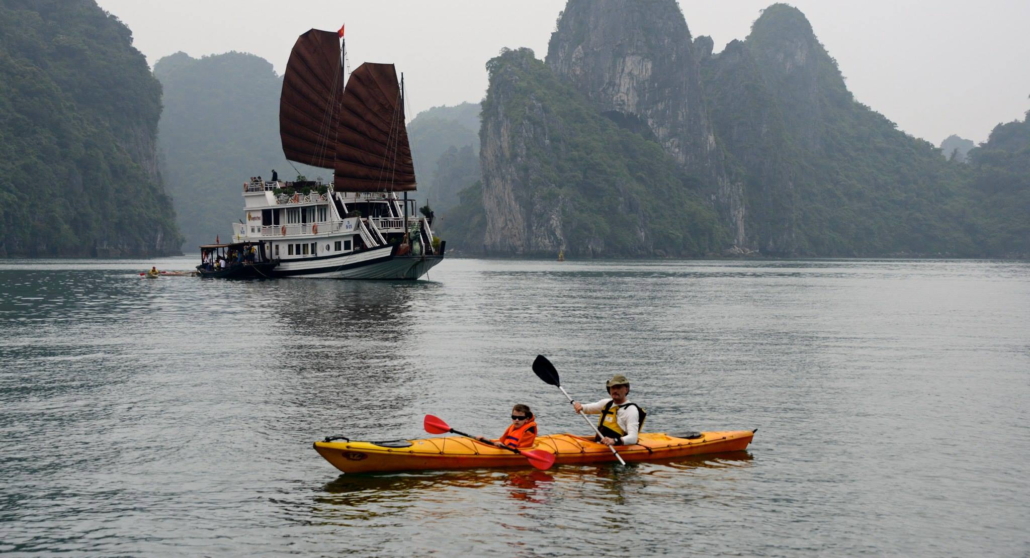
Boat travel with kids can be a lot of fun. In addition to full-day water excursions, consider boat trips to explore areas best reached by water. River cruises can be a relaxing way to visit port cities without having to find new accommodations and move all your gear between locations. Ferries are like trains on the water—great for worldschooling and sightseeing, with nowhere to be other than where you are. And it’s often fairly easy to arrange a visit to the bridge to meet the captain; don’t be bashful—tell a crew member you are worldschooling and would love to learn about navigation equipment, mapping, or marine weather forecasting. Some traveling families even live on their boat full time, using it for both travel and accommodation similar to RVs and vans on land.
RV and Camper Van Travel
Recreational vehicles (RVs) and camper vans provide a unique way to experience a Wonder Year, and indeed, many families build their entire experience around this lifestyle. RVs and vans offer both a place to live and a way to move around, an appealing combination for an increasing number of full-time travelers—especially those who want the same bed every night. Others go back and forth between their RV, van, or camping tent and other accommodations, depending on where they’re headed and if they need a bit more space for a while. More than a million Americans, many of them families with children, live full time in RVs. With the rise of digital nomadism and increased familiarity with educating kids at home, this number rose considerably during the pandemic and is likely to continue to grow.
There are many considerations for living on a boat or in an RV or van, including choosing the best new, used, or rented vehicle for your family’s needs, financing and insuring your selection, maintaining your traveling home, finding storage when not in use, and keeping or selling it after your Wonder Year. The purchase of a home that moves with you is a significant one, and we encourage you to do your due diligence and secure warranties and/or inspections. You do not want to spend thousands of dollars only to find out there’s a leak in the water line or faulty electronics that you did not know to check. Our resources section, as well as many websites and books, provide guidance about these topics, and we advise checking them out for the most up-to-date information about this lifestyle. There are now even consultants who will help you find, inspect, and purchase the perfect rig!
Julie’s and Angela’s families each lived in an RV for part of their Wonder Year, and both enjoyed their experiences immensely. While it can be an adjustment to live together in small mobile dwellings, the simple, minimalist lifestyle holds much appeal, and don’t worry—you’ll get used to rubbing elbows while brushing your teeth. If nothing else, it’s great not to have to pack and unpack repeatedly as you travel. RVs also make for excellent traveling classrooms, with space for worldschooling materials and built-in tables or desks to complete work. Mobile lodging can give kids a sense of “home,” often with their own dedicated space inside, plus responsibilities for packing, cleaning, maintaining, and beautifying the rig. Another big win is the opportunity to reside in ports, campgrounds, parks, and open spaces that provide unparalleled access to the great outdoors. After all, your home may be small, but the world is your backyard.
Many of us equate RV travel with domestic excursions, but you can travel by RV or van in many parts of the world. If there’s a place you want to visit, look into campsite and off-grid options—some countries have excellent camping infrastructure, whereas others are quite limited. You’ll need to decide if you are going to rent or purchase a vehicle at home and transport it internationally, or instead will travel to your destination and rent or purchase a rig there. If you are sending your vehicle overseas, you will need to comply with export regulations on the domestic side and import requirements on the other, including a clean title and proof of ownership and insurance. There are companies that specialize in shipping recreational vehicles and helping with the necessary paperwork.
In addition to the usual border crossing procedures, be prepared to share where you’re headed in your rig and how long you’ll be staying. If you have any pets on board, make sure you have the requisite documents for their entry. Clear your refrigerator and pantry of items that are likely to be prohibited, such as fruits, vegetables, and plants in soil, and plan to do your grocery shopping after you have crossed the border.
Living on the road in another country is part of the fun, but make sure you know which locations are going to work for your rig. Consider the local conditions, road safety, Wi-Fi availability, cost and types of fuel, and traffic. And do your homework to make sure your big RV fits through that little tunnel in the hills of Tuscany!
Map Your Route
Show your kids how your route is shaping up. Then start to fill in locations between your anchors. There may be some push and pull between costs and priorities. You might need to choose some budget-friendly places to visit to balance your other selections. Can you mix your transportation options between locations? If you are open to visiting places closer to your anchors, you might be able to go by car or train and save considerable cost. Get creative and make trade-offs as you see fit, knowing you are crafting your own adventure.
As you map out your worldschooling plan, consider that mode of transportation offers its own trade-offs—cost, comfort, carbon footprint, convenience—and each can shape your journey in powerful ways. However you choose to explore, we hope you enjoy the ride!